
For anyone comparing privacy claims before paying, from any country, with no account to open.
No-logs VPN, RAM-only servers
What "no logs" can honestly mean at each layer, what a RAM-only server removes, and the one record that still exists on our side.
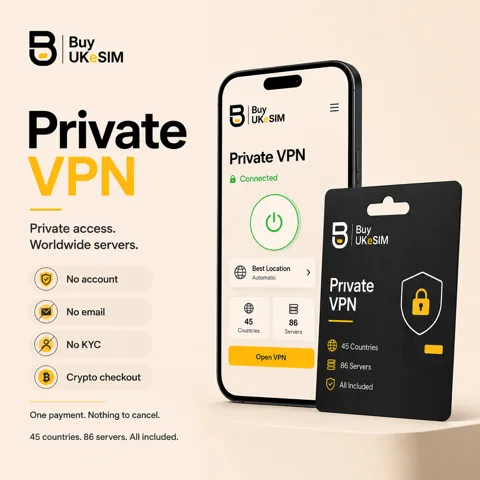
- No logs: source IP addresses and connection timestamps are never stored
- Servers run RAM-only, so a reboot leaves nothing on the machine
- No signup, no email required, no password, no card, no KYC
- Our whole customer record is one order row: plan, expiry, payment reference, magic code, and an email only if you left one
- No independent audit is claimed here, and you should ask any provider claiming one what was in scope
- One credential set works on every server we list, 5 devices at once, bandwidth not metered
- Plans from 7 to 365 days, no auto-renewal, extend from the order page
Every VPN says it keeps no logs. The phrase is worth almost nothing on its own, because logging is not one thing: a server can record the address a connection came from, the moment it started and ended, how many bytes moved, which names were resolved, or nothing at all. A useful answer names the layer.
Ours is specific and narrow. The network keeps no logs: source IP addresses and connection timestamps are never stored, and the servers run RAM-only, so a reboot leaves nothing behind on the machine. That is the whole claim. We have not had an independent audit and we will not imply one, because a page about honest claims cannot open with an unsupported one.
What follows is the technical version: what each part of that actually buys you, what it does not, what we hold as the seller, and how to reduce what any provider could know about you regardless of which one you pick.
What can be logged, layer by layer
Connection metadata is the layer that matters. It is the source address the session came from, the timestamp it opened and closed, the server it used and the volume of traffic. This is the layer that links a real person to a session, and it is the layer our servers do not write down: no source IP addresses, no connection timestamps.
DNS is the second layer. Every name your device looks up passes through a resolver, and a resolver that keeps a history has a readable list of what you visited even if nothing else was stored. Traffic content is the third, and it is encrypted end to end by the tunnel, so the server carries it without being able to read it.
The fourth layer is not on the server at all. It is the account: an email address, a payment card, a login history, a support ticket with your name in it. Most providers keep more identity in that layer than they could ever infer from the network layer, which is why we do not have one.
What RAM-only changes, and what it does not
A RAM-only server boots its entire operating system into memory. Nothing is written to a persistent disk in normal operation, so there is no place for a log file to accumulate, no swap file holding fragments of state and nothing to recover from the drive if the machine is taken away powered down. A reboot returns the machine to a blank slate.
That is a real property and it is worth having. It removes the most common failure mode in this industry, which is not a provider lying but a provider forgetting: a debug log left on after an incident, a crash dump, a backup nobody remembered was running.
What it does not do is make a running server blind. While your session is live, that machine is forwarding your packets, and forwarding requires knowing where they came from in order to send the replies back. RAM-only means that state is not recorded, is not durable and does not survive a power cycle. It does not mean the traffic is invisible while it is in flight. Anyone selling RAM-only as "impossible to observe" is overselling it, and you should discount everything else they say by the same amount.
What we hold as the seller
Separately from the network, there is a shop, and the shop has a record. Ours is one order row: which plan you bought, when the order was created, when it expires, the crypto payment reference, the 8-character magic code that opens the order page, and an email only if you chose to leave one. That is the whole customer record.
It contains no name, no password, no card number and no billing address, because none of those fields exist at checkout. There is no account to log into and therefore no login history, no password reset trail and no mailbox tying the subscription to a person. If you type an email anywhere on this site, for a support ticket or a reminder, it exists because you chose to give it.
The one thing we cannot make disappear is the payment itself. A crypto payment goes through a gateway that sees the transaction, and on a transparent chain such as Bitcoin or an ERC-20 stablecoin it is publicly recorded and permanent. Monero is the coin where the payment itself stays private, which is the only reason it keeps coming up on pages like this one.
What a VPN moves, rather than removes
Without a tunnel, your internet provider or the network you are on sees every destination you connect to. With one, it sees an encrypted connection to a single endpoint and nothing about where that traffic goes afterwards. The destinations become visible to the VPN server instead.
That is a transfer of trust, not the removal of it. The honest question is never "does this make me invisible", it is "which party would I rather could see this, and what does that party keep". Our answer to the second half is: no source addresses and no timestamps, on a machine with no disk to keep them on.
None of it touches the layer above. A site you sign into knows exactly who you are no matter which address you arrive from, a cookie you were already carrying still identifies you, and a browser fingerprint is unchanged by a tunnel. A VPN is a network tool and it fixes network problems.
Reducing what any provider can know about you
Buy without an identifier. If a provider never receives an email address, that provider cannot hand one over, cannot leak one in a breach and cannot use it to link two of your purchases. This is the single largest reduction available and it costs you nothing except a credential you now have to store yourself.
Pay in a way that does not carry your identity into the transaction. A card is your legal name and your bank. Coins bought on an exchange that verified your passport carry that verification to the address you send from, on a chain that keeps the hop forever. Monero does not have that property.
Reach the site over Tor if the visit itself matters, including our onion service, so the purchase is not attached to a home address. Then keep the credential offline and keep separate things separate: the strongest configuration any provider can honestly offer you is still undone by signing into your everyday accounts through it.
Buy and run it while leaving the smallest record
- 1
Pick a plan length
Plans run from 7 to 365 days. There is no auto-renewal and no card on file, so nothing recurring exists to cancel later.
- 2
Pay in one crypto transaction
A dozen coins are accepted. Monero is the one where the payment itself stays private; the others are recorded on a public chain.
- 3
Save the magic code
The 8-character code is the only thing that opens your order page. There is no account and no password reset, so store it somewhere offline before you close the tab.
- 4
Install a configuration
Take the WireGuard QR or .conf, an OpenVPN .ovpn over UDP or TCP, or the VLESS link. One credential set works on every server we list, on up to 5 devices at once.
- 5
Verify it yourself
Load any IP-check page before and after connecting. Trusting a provider is a choice; checking takes ten seconds.
- 6
Extend when you want to
Open the order page with the magic code and add another period. It stacks on top of the current expiry rather than restarting it.
Questions & answers
What does "no logs" mean on this VPN specifically?
It means the network never stores source IP addresses or connection timestamps, and the servers run RAM-only so nothing persists across a reboot. That is a policy plus an architecture. It is not a mathematical proof, and no provider can give you one.
Has the no-logs policy been independently audited?
No, and we will not imply otherwise. An audit is a snapshot of what an auditor was shown on a particular day, which is useful but far weaker than it is usually sold as. Judge a provider on what it structurally cannot keep and on how little it asks you for.
What does a RAM-only server actually protect against?
It protects against persistent state: log files accumulating on a disk, crash dumps, and anything recoverable from hardware that has been powered down and taken away. A reboot wipes the machine. It does not stop a live server from handling live packets while your session is running.
What do you store about me as the seller?
One order row: the plan, the creation date, the expiry, the crypto payment reference, the 8-character magic code, and an email only if you chose to leave one. There is no name, no account and no card, because those fields do not exist at checkout.
Could you link one of my VPN sessions to my order?
Sessions are not recorded with source addresses or timestamps, so there is nothing on the network side to join an order row to. Unless you left an email, the order row itself contains no identity, so even a complete copy of it would not name anyone.
Does a no-logs VPN make me anonymous online?
No. It moves what your internet provider can see to a server instead, which is a meaningful change but not anonymity. Any site you sign into still knows exactly who you are, and your browser fingerprint is unaffected by a tunnel.
What is the most private way to buy it?
Reach the site over Tor, pay in Monero, give no email address, and store the magic code offline. That combination leaves no identifier with us and no traceable payment on a public chain.
Do I need an account or a password?
No. There is no sign-up at all. The 8-character magic code from checkout opens your order page, shows your configurations and lets you extend the plan.
More topics
Related guides
No-logs VPN, RAM-only servers
What "no logs" can honestly mean at each layer, what a RAM-only server removes, and the one record that still exists on our side.
See VPN plans