
Работает в 190+ странах, QR приходит сразу, куда бы вы ни ехали.
Travel eSIM или роуминг: что оставляет контроль вам?
Спокойный разбор того, сколько на самом деле стоит каждый вариант и насколько вы влияете на счёт.
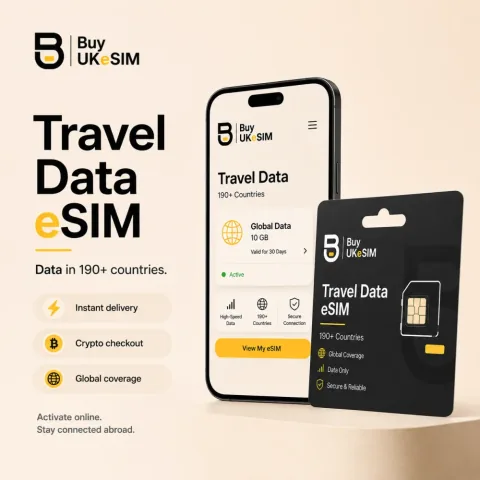
- Роуминг не требует настройки, но тариф задаёт оператор, и он может быть высоким или непредсказуемым.
- Travel eSIM показывает полную цену до оплаты, тарифы от $1.99 по стране, ГБ и дням.
- Роуминг сохраняет домашний номер для звонков и сообщений, travel eSIM даёт только интернет.
- BuyUKeSIM не требует ни аккаунта, ни KYC, ни приложения: сканируйте QR и подключайтесь.
- Оплатить можно 12 криптовалютами и установить eSIM до вылета, чтобы прилететь уже онлайн.
Пересекая границу, телефон так или иначе должен подключиться к чужой сети. Два обычных пути - роуминг вашего домашнего оператора или отдельная travel eSIM, купленная под направление. Оба выводят вас в интернет, но берут деньги совсем по-разному и оставляют вам очень разный контроль над итоговым счётом.
Здесь мы сравниваем их честно. Роуминг удобен тем, что ничего настраивать не надо, но он бывает дорогим и непредсказуемым. Travel eSIM требует немного усилий заранее, зато цену вы видите до оплаты. Учтите: travel eSIM даёт только интернет, номера для звонков и сообщений в ней нет.
Как на самом деле сравнивать расходы
Роуминг тарифицирует ваш домашний оператор по соглашениям с зарубежными сетями. Где-то добавляется фиксированная суточная плата, где-то счёт идёт за мегабайты, а иногда небольшой пакет уже включён в ваш тариф. Загвоздка в том, что цену задаёт оператор и она может меняться по регионам, поэтому даже спокойная неделя с картами и мессенджерами способна дать неприятную строку в счёте.
Travel eSIM переворачивает эту модель. Вы выбираете страну, объём данных и количество дней и видите цену до оплаты. Тарифы начинаются от $1.99 и зависят от направления, гигабайтов и срока. Вы покупаете фиксированный пакет, поэтому никакой счётчик не крутится в вашем ежемесячном счёте, и именно за это путешественники берут eSIM.
Где роуминг всё ещё выигрывает
Роуминг не всегда плохой выбор. Если у вас в тарифе щедрый роуминг или вы уезжаете всего на день-два, удобство ничего не делать может перевесить небольшую экономию. Роуминг также сохраняет ваш обычный номер для звонков и SMS, чего дата-eSIM не даёт.
Честный компромисс - это контроль против усилий. Роуминг не требует от вас ничего, но отдаёт ценообразование оператору. Travel eSIM просит установить QR-код, зато возвращает решение о цене вам. Если предсказуемая стоимость интернета важнее, чем сохранение одного номера в сети, eSIM обычно оказывается выгоднее.
Вопросы и ответы
Travel eSIM всегда дешевле роуминга?
Не всегда. Для очень коротких поездок или тарифов с щедрым включённым роумингом роуминг может быть проще и сопоставим по цене. Для длительных поездок и большого расхода трафика фиксированный пакет eSIM обычно проще заложить в бюджет, потому что цену вы видите до оплаты.
Можно ли звонить с travel eSIM?
Travel eSIM от BuyUKeSIM даёт только интернет, поэтому у неё нет номера для обычных звонков и SMS. Вы можете пользоваться интернет-звонками и мессенджерами через дата-соединение, а роуминг остаётся вариантом, если нужен активный домашний номер.
Нужно ли отключать роуминг, чтобы пользоваться travel eSIM?
Нет. Телефон может держать обе линии. Многие оставляют домашнюю SIM активной для звонков, а мобильный интернет переключают на travel eSIM: так вы избегаете платы за роуминг-трафик и остаётесь доступны на своём номере.
Другие направления
Гайды
Travel eSIM или роуминг: что оставляет контроль вам?
Спокойный разбор того, сколько на самом деле стоит каждый вариант и насколько вы влияете на счёт.
Travel eSIM →